Initial capacity is planned at approximately 5,000 vehicles a year, with a substantial expansion to follow. The first output will serve the Qatari market before sales extend to other Gulf Cooperation Council countries and selected markets abroad. Detailed planning is expected to be completed before construction of the manufacturing plant begins.
The vehicles will be engineered in the United Kingdom and built in Qatar under a Made in Qatar designation. Development must account for high ambient temperatures, battery thermal management, local driving patterns and regional customer expectations. Reliable operation in extreme heat will therefore be one of the project’s central technical requirements.
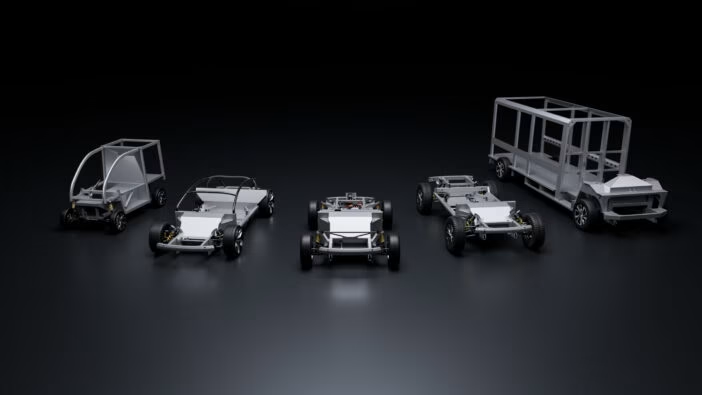
Both models are set to use WATT’s aluminium PACES platform. Its modular architecture integrates the battery into the main structure and supports front-wheel, rear-wheel and all-wheel drive. The manufacturer says the system reduces weight, tooling costs and production complexity while allowing adaptation to different passenger and commercial vehicle sizes.
JTA is expected to contribute investment and access to the regional market, while WATT will lead the technical development of the vehicles. The partners also connect the plan with technology transfer, skilled employment and the gradual creation of a local supply chain rather than limiting the project to final vehicle assembly.
WATT specialises in low- and medium-volume electric vehicle production, both under its own name and for other customers. The company operates in Cornwall and Worcestershire and is preparing a new facility in the Midlands. That experience is relevant to a Qatari project beginning at a scale well below that of a mass-market car factory.
JTA was established in 2010 and is headquartered in Doha. Its investments include energy, transport, infrastructure, manufacturing and technology. The announced timetable still depends on a detailed implementation plan, factory construction and joint vehicle development, so the 2028 date should be understood as the partners’ current target rather than completed capacity.